Useful insights into financial modeling

Financial model structure for joint ventures and minority investments showing governance and cash flow logic

Joint Ventures & Minority Investment Modeling: How to Build Models That Reflect Legal Reality, Not Spreadsheet Logic

Joint venture and minority investment models fail for one simple reason: they are often built like reduced acquisition models. In reality, they are contractual systems where value creation, cash-flow access, and control are governed by legal mechanisms rather than ownership percentages. A professional model must therefore translate legal structures into …

more…

Comparison of scenario and sensitivity analysis in financial modeling

Scenario vs. Sensitivity Analysis: Same Model, Very Different Questions

Scenario analysis and sensitivity analysis are often used interchangeably—yet they answer fundamentally different questions. Confusing the two leads to weak risk assessment and misleading conclusions. This comparison explains how each method works, when to use it, and how professionals apply both in bank-grade financial models. Why This Distinction Actually Matters …

more…

Modeling inflation in long-term DCF cash flows

Inflation Doesn’t “Cancel Out” — It Compounds Your Modeling Errors

Inflation is one of the most misunderstood inputs in long-term financial models. Many valuations fail not because inflation is ignored, but because it is applied inconsistently. This guide explains how to model inflation correctly in long-term cash flows—cleanly, auditable, and aligned with professional valuation standards. Why Inflation Is the Silent …

more…

Purchase price allocation modeling process for M&A transactions

Purchase Price Allocation (PPA) Modeling Explained: Why Most Models Break Under Scrutiny

Purchase Price Allocation (PPA) modeling is not an accounting formality—it is a valuation exercise with direct consequences for earnings quality, deal credibility, and post-merger decision-making. A robust PPA model translates transaction economics into balance-sheet reality. A weak one distorts amortization, misstates goodwill, and fails under audit pressure. Why PPA Modeling …

more…

Excel versus Google Sheets comparison for professional financial modeling

Excel vs Google Sheets for Financial Modeling: The Decision Most Models Get Wrong

Choosing the wrong spreadsheet tool does not just slow you down — it directly affects model robustness, auditability, and decision quality. While both Excel and Google Sheets can handle basic calculations, only one consistently meets the standards required for professional financial modeling in valuation, M&A, and strategic finance. The Real …

more…

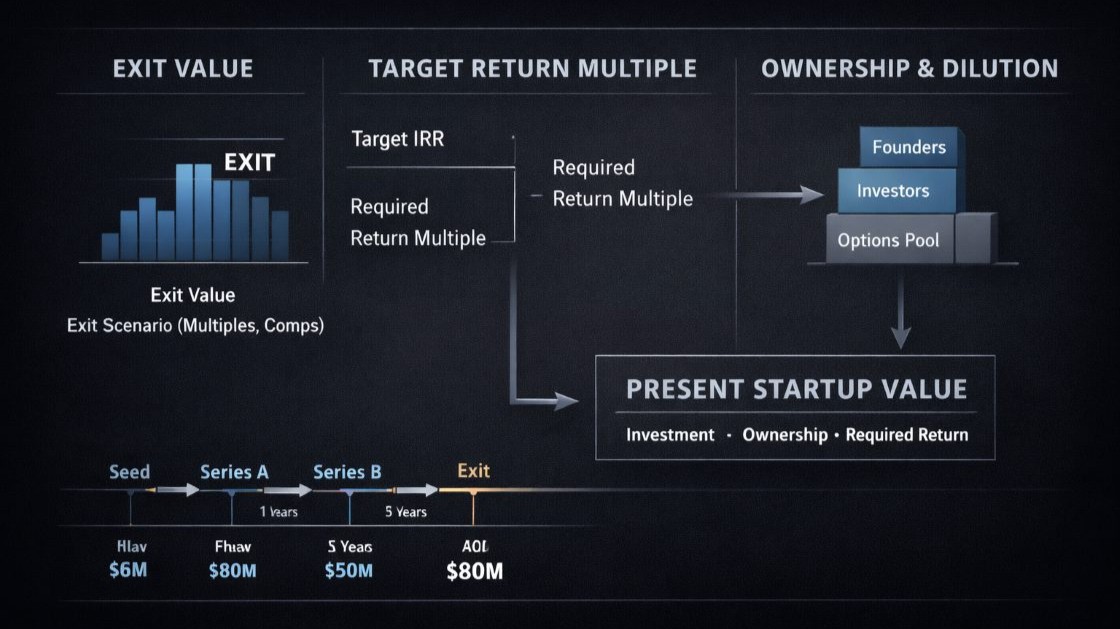
Venture capital method explained with startup valuation logic

Valuing Startups Isn’t Guesswork: The VC Method Explained Properly

The Venture Capital (VC) Method is often described as “simple.” In practice, it is one of the most frequently misapplied valuation approaches in early-stage finance. This guide breaks down how the VC Method really works, where it adds value, and why disciplined financial modeling is the difference between a defensible …

more…

Close-up of a keyboard highlighting essential financial modeling shortcuts for Excel efficiency.

Forget the Mouse: The Elite Financial Modeler’s Shortcut Manifesto (2026 Edition)

Efficiency in financial modeling isn’t just about speed; it’s about reducing the cognitive load to focus on the numbers rather than the navigation. For high-stakes M&A and corporate planning, the mouse is an anchor. To build bankable, prfofessionally audited models, you must master the “invisible” keyboard strings that allow for …

more…

Modern workspace with laptop used for SaaS financial modeling, illustrating recurring revenue, retention, and growth analysis.

SaaS Financial Modeling: ARR, Churn, LTV, and Cohort-Based Retention

SaaS financial models are built around recurring revenue and customer behavior, not one-time sales. Value creation depends less on short-term profitability and more on how efficiently customers are acquired, retained, and expanded over time. As a result, SaaS modeling requires a fundamentally different mindset from traditional financial modeling. The central …

more…

Opening hours

Appointment by
prior arrangement

ADDRESS

37 Wall St, New York, NY

Telephone

+1-754-249-7916